
Standing Seam vs. Corrugated Metal Roofing: Which One Fits Your Home?
If you’re considering a metal roof, you’ve probably noticed that “metal roofing” covers a lot of ground. Two of the most common options are standing seam and corrugated metal panels. They both protect your home, but they look different, cost different amounts, and age differently.
Here’s a straightforward comparison to help you choose the right one for your home in Northern Virginia.
What Is Standing Seam Metal Roofing?
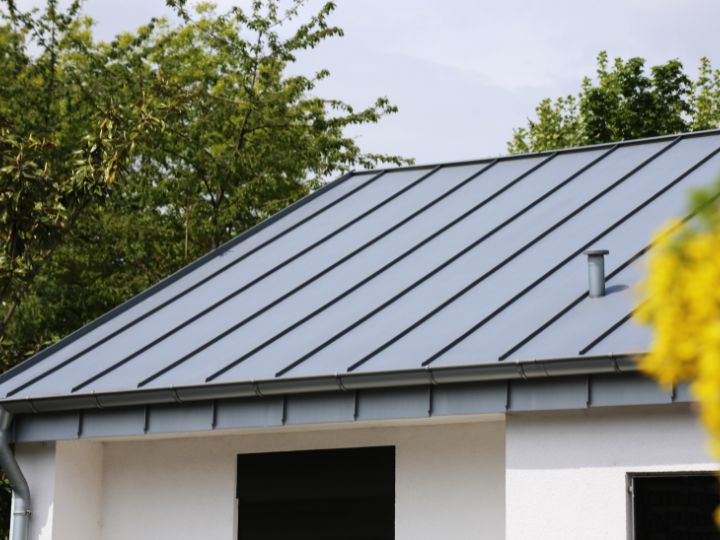
Standing seam panels run vertically from the ridge of the roof to the eave. The panels lock together along raised seams, and the fasteners are hidden underneath. Because nothing is screwed through the face of the panel, there are very few places for water to get in.
The result is a clean, modern look with crisp vertical lines. It’s often the first choice for homeowners who want a premium finish and long-term performance.
What Is Corrugated Metal Roofing?
Corrugated panels have a wavy or ribbed profile. They are installed with exposed fasteners, meaning screws with small rubber washers go through the face of the panel and into the roof deck.
This is the classic “barn roof” look. It’s a practical, budget-friendly option that has been used on homes, porches, sheds, barns, and workshops for generations.
Side-by-Side Comparison
Lifespan and cost vary by metal, gauge, finish, and installation quality, so treat these as general ranges rather than promises.
Cost: What You Pay Now vs. Later
Corrugated is the less expensive option upfront. The panels are simpler to make and faster to install, which keeps both material and labor costs down.
Standing seam costs more because of the heavier gauge metal, the more precise installation, and the specialized tools involved. But it’s worth looking at the full picture. A roof that lasts decades longer and needs less upkeep can cost less per year of service than a cheaper roof you replace sooner.
If you plan to stay in your home for 15 years or more, standing seam often makes the stronger long-term investment. If you’re working with a tighter budget or covering a smaller structure, corrugated can be a smart choice.
Durability and Maintenance
The biggest difference comes down to fasteners.
On a corrugated roof, every exposed screw is a potential weak point. Over time, the rubber washers can dry out and crack from sun exposure, and the metal expands and contracts with the seasons. That can loosen fasteners and open small gaps. The fix is simple, since loose or worn fasteners can be tightened or replaced, but it does mean the roof should be checked every few years.
Standing seam avoids this problem by design. The panels float on clips that allow for natural expansion and contraction, and the fasteners stay protected under the seams. That’s a big reason it holds up so well and requires so little attention.
How Each Roof Handles Northern Virginia Weather
Our region sees hot, humid summers, freezing winters, heavy thunderstorms, strong winds, and the occasional hail event. That mix is tough on any roof.
Rain and storms: Both materials shed water well. Standing seam has the edge in heavy, wind-driven rain because there are no exposed penetrations.
Wind: Standing seam’s interlocking panels and clip system perform very well in high winds. Corrugated can perform well too, but only when it’s installed with the correct fastener spacing.
Snow and ice: Metal roofs shed snow quickly. Snow guards can be added to control where it slides, which matters over doors, walkways, and driveways.
Hail: Neither material is hail-proof, and thinner gauge panels can dent. Thicker gauge standing seam resists denting better. Hail damage can also affect insurance coverage, so it helps to document it.
Heat and humidity: Quality coatings reflect solar heat and resist fading and corrosion. Ask about the finish warranty, since the coating matters as much as the metal.
Which Style Fits Your Home?
Standing seam is usually a good fit if you:
Want a modern or upscale look
Plan to stay in your home long term
Want the lowest maintenance and best leak protection
Have a low-slope section or complex rooflines (standing seam handles low slopes better)
Corrugated is usually a good fit if you:
Are working with a tighter budget
Like the rustic, farmhouse, or industrial look
Are roofing a porch, garage, barn, or addition
Are comfortable with occasional fastener checks
Don’t Forget HOA and Historic District Rules
Many neighborhoods across Northern Virginia, including parts of Arlington, Alexandria, and Fairfax County, have HOA covenants or historic district guidelines that limit roofing materials, profiles, or colors. Check the rules before you choose, or ask us to help you review them. It’s far easier to confirm approval up front than to redo a project later.
Frequently Asked Questions
Are metal roofs noisy in the rain?
Not when they’re installed properly. With solid decking, underlayment, and insulation, a metal roof is no louder than other roofing types for most homeowners.
Can a metal roof be installed over my existing shingles?
Sometimes, depending on local code and the condition of the roof underneath. In many cases a full tear-off is the better choice because it lets us inspect and repair the decking. An on-site inspection will tell us which route makes sense.
Do metal roofs attract lightning?
No. Metal doesn’t attract lightning, and if lightning does strike, the metal is noncombustible, which is a safety advantage.
Will a metal roof lower my energy bills?
It can. Reflective coatings reduce heat absorption, which may help with summer cooling costs. Results depend on your insulation, attic ventilation, and the finish you choose.
How do I know when it’s time to replace my roof?
Common signs include leaks, missing or curling shingles, sagging areas, granule loss, and visible storm damage. A professional inspection is the best way to know for sure.
Choosing the Right Roof Starts With the Right Inspection
The best roof for your home depends on your budget, your home’s style, your roof’s slope and condition, and how long you plan to stay. There’s no single right answer, but there is a right answer for your house.
Cassella Roofing serves homeowners across Northern Virginia, including Fairfax, Arlington, Loudoun, Prince William, and Fauquier counties. We’ll inspect your roof, walk you through your options, and give you a clear written estimate with no pressure.
Ready to talk it over? Schedule your free roof assessment or call us at (571) 594-6393.
