
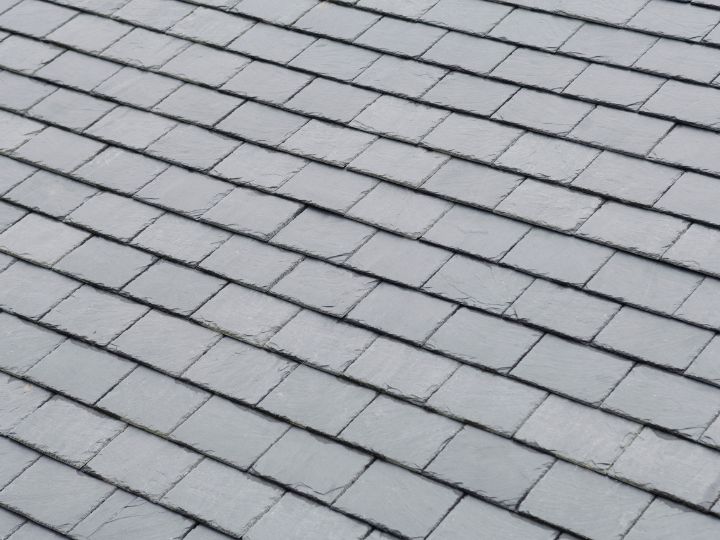
Synthetic vs. Natural Slate Roofing: Comparing Cost, Weight, and Longevity
There's a reason slate roofs show up on some of the most beautiful historic homes in Northern Virginia. Few roofing materials look as timeless or last as long. But if you're thinking about slate for your own home, you'll quickly face a big question: should you go with the real thing or a synthetic alternative?
Both options can give your home that classic slate look. Under the surface, though, they're very different products. When you compare synthetic with natural slate roofing, the three things that matter most are cost, weight, and longevity. Let's walk through each one so you can make the choice that fits your home, your budget, and your long-term plans.
What Is Natural Slate Roofing?
Natural slate roofing is made from real stone. Slate is a fine-grained metamorphic rock that's quarried, split by hand into thin tiles, and installed one piece at a time. Each tile has its own subtle texture and color variation, which gives a natural slate roof its one-of-a-kind character.
Virginia has its own slate history. Buckingham County, in the central part of the state, has been producing high-quality slate for well over a century, and you'll find it on homes, churches, and public buildings across the Commonwealth.
What Is Synthetic Slate Roofing?
Synthetic slate is an engineered roofing product designed to look like natural stone. Most are made from a blend of recycled rubber, plastic polymers, or composite materials, then molded to capture the texture and edges of real slate.
Synthetic roofing has come a long way in recent years. Many of today's products are hard to tell apart from real slate once they're on the roof, especially from the street.
Cost: What Will You Actually Pay?
For most homeowners, this is where the conversation starts.
Natural slate is one of the most expensive roofing materials you can choose. The stone itself costs more, and installation takes specialized skills, extra time, and careful handling. In general, homeowners can expect natural slate to run roughly $15 to $30 or more per square foot installed, depending on the slate quality, roof complexity, and whether the structure needs reinforcement.
Synthetic slate typically costs much less, often in the range of $9 to $17 per square foot installed. The material is less expensive to produce, lighter to transport, and quicker for crews to install.
Keep in mind that these are ballpark figures. Your actual price will depend on your roof's size, pitch, layout, and condition. The best way to get a real number is with an in-person roof assessment and a written estimate.
The bottom line on cost: Synthetic slate usually wins on upfront price. Natural slate costs more at the start, but its very long lifespan can spread that investment out over many decades.
Weight: Can Your Roof Handle It?
This is the factor many homeowners don't think about until a roofer brings it up, and it's a big one.
Natural slate is heavy. A natural slate roof can weigh somewhere around 800 to 1,500 pounds per roofing square (a "square" is 100 square feet of roof). That's several times heavier than a typical asphalt shingle roof. If your home wasn't originally built for slate, the roof framing may need to be reinforced before installation, which adds time and cost to the project.
Synthetic slate is much lighter. Most products weigh in at roughly 200 to 400 pounds per square, which is close to the weight of many architectural shingles. In most cases, your existing roof structure can support synthetic slate without any added reinforcement.
The bottom line on weight: If your home already has a slate roof, the structure was likely built to carry it. If you're switching from asphalt shingles, synthetic slate is often the simpler, more practical option.
Longevity: How Long Will It Last?
Here's where natural slate really shines.
Natural slate roofing is famous for lasting a very long time. High-quality hard slate can last 75 to 150 years or more with proper care. Softer slate varieties may have a shorter lifespan, but they still typically outlast most other roofing materials. It's not unusual for a natural slate roof to outlive the people who installed it.
Synthetic roofing doesn't quite match that, but it still holds up well. Most synthetic slate products come with manufacturer warranties of around 40 to 50 years, and some offer limited lifetime coverage. Because synthetic slate is a newer product, there isn't a century of real-world track record yet, but today's materials are built to handle sun, rain, and temperature swings.
The bottom line on longevity: Natural slate is the long-haul champion. Synthetic slate offers a solid lifespan that's still well beyond what you'd get from standard asphalt shingles.
Other Things to Consider
Cost, weight, and longevity are the big three, but a few other factors can tip the scale one way or the other.
Durability and Impact Resistance
Natural slate is tough against weather, but individual tiles can crack if they're struck hard or walked on. Many synthetic slate products are designed to flex a bit and carry high impact ratings, which can help in hailstorms. Most quality options in both categories also carry strong fire ratings.
Maintenance and Repairs
Natural slate needs very little day-to-day maintenance, but repairs should be handled by someone experienced with slate. Walking on it the wrong way can break tiles, and finding replacement pieces that match older slate can take some work. Synthetic slate is easier to repair, and replacement tiles are usually simple to source.
Appearance
Natural slate has depth, color variation, and a natural texture that's hard to fully replicate. Synthetic slate gets impressively close, and many products come in blended color options to mimic that natural look. From the curb, most people won't notice the difference.
Historic District Rules
If your home is in a historic district, such as parts of Old Town Alexandria or other protected neighborhoods across Northern Virginia, there may be rules about what roofing materials you can use. Some review boards require natural slate on historic homes, while others allow approved synthetic products. It's always worth checking with your local architectural review board before you make a final decision.
Eco-Friendliness
Natural slate is a natural material that lasts for generations and can often be salvaged and reused. Many synthetic slate products are made with recycled materials, which keeps waste out of landfills. Both options have something to offer here.
So, Which One Is Right for You?
There's no one-size-fits-all answer, but here's a simple way to think about it.
Natural slate might be the better fit if:
You plan to stay in your home for the long haul
Your home is historic or already built to support a slate roof
You want the authentic look and feel of real stone
You're comfortable with a higher upfront investment
Synthetic slate might be the better fit if:
You want the slate look at a more manageable price
Your home's structure wasn't built for heavy roofing
You'd like quicker installation and easier repairs
Impact resistance is a priority for you
Frequently Asked Questions
Is synthetic slate as good as natural slate?
Synthetic slate gives you a similar look at a lower cost and weight, but natural slate lasts considerably longer. "Better" really depends on your budget, your home's structure, and how long you plan to stay.
Can I put natural slate on a house that currently has asphalt shingles?
Sometimes, but not always. Because natural slate is so heavy, your roof framing may need reinforcement first. A professional inspection will tell you whether your home can safely support it.
Does synthetic slate look fake?
Older synthetic products sometimes did, but today's options are designed with realistic textures and color blends. Once installed, most people can't tell the difference from the ground.
How long does a slate roof installation take?
Natural slate installations usually take longer because each tile is handled and fastened individually. Synthetic slate installs faster thanks to its lighter weight and easier handling. Your roofer can give you a more specific timeline based on your project.
Let's Talk Through Your Roofing Options
Choosing a new roof is a big decision, and you don't have to figure it out on your own. At Cassella Roofing, our family-run team believes in clear communication and honest advice. We'll take a close look at your roof, explain what we find, and walk you through the options that make the most sense for your home and budget.
Whether you're comparing synthetic vs. natural slate roofing or weighing other materials, we're here to help every step of the way. Start with a free roof assessment and written estimate, with zero cost and no obligation. Call us today at (571) 605-2462 or request your estimate online.
